FDS vs. Cabled Traditional Timing
 Johannes Hyrsky5 March 2026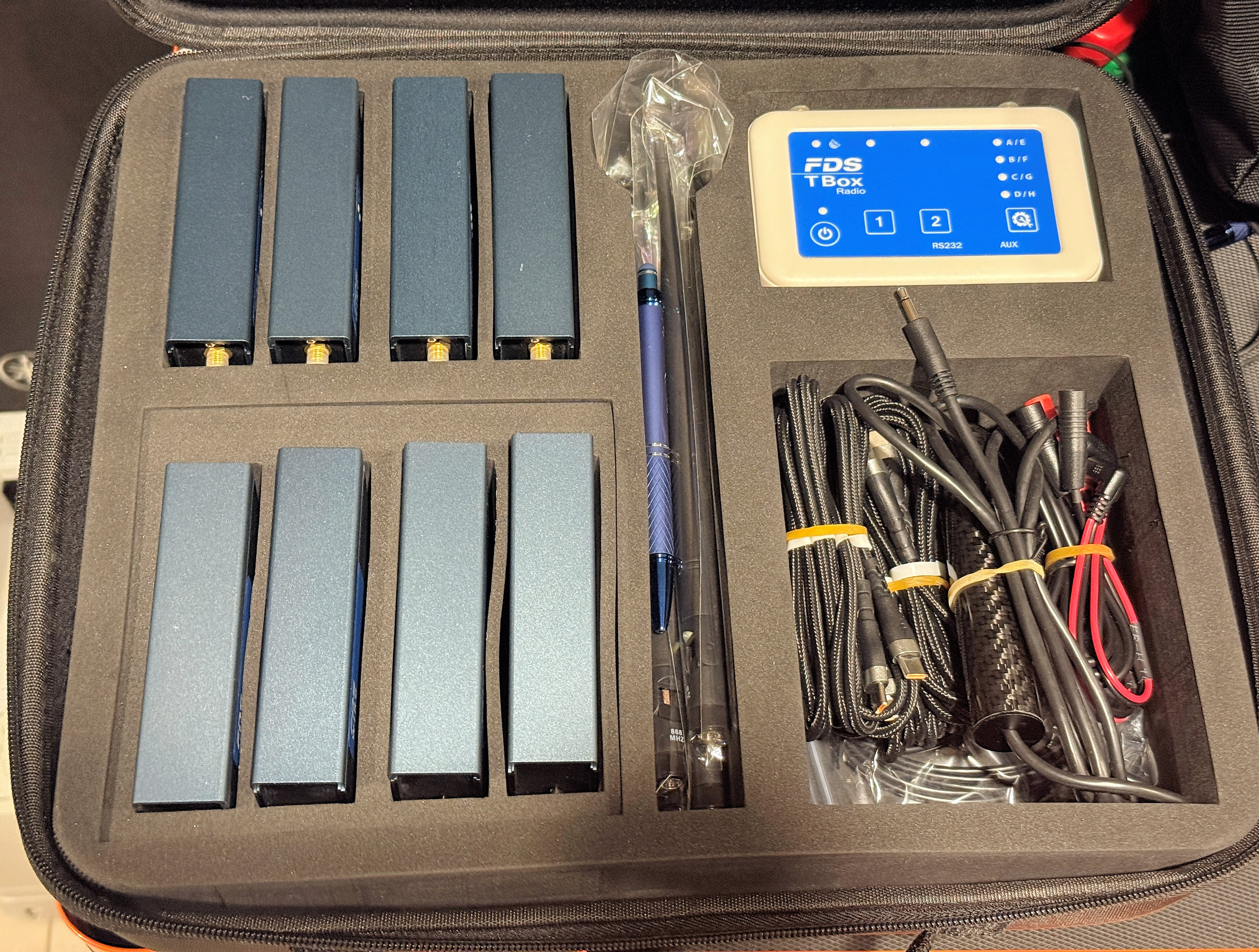
Many clubs wonder whether to replace old cabled timing with a wireless system. The answer depends on the use case, but for most club-level events wireless FDS wins clearly. Let's go through the differences honestly.
Setup time
A cabled system requires hundreds of metres of cable across the arena, spooling, protection and testing. Setup easily takes a couple of hours and two people. Wireless FDS is set up in minutes: tripods, cells on, link to the receiver and a test run. The difference is dramatic at small events where volunteers are limited.
Reliability
The advantage of cable is that it is not exposed to radio interference. The drawback is that cable gets damaged: driven over, tripped on, gnawed by rodents. A single severed cable brings down the whole system mid-competition. A wireless system has no such single point of failure, and a quality FDS radio is designed for interference tolerance.
Cost
A cabled system can be cheaper as hardware, but labour, cabling, reels and damage repair raise the total cost. A wireless system costs more to buy but saves working hours at every event for years.
Flexibility and portability
Wireless gear fits in a transport case and travels from event to event in one person's car. A cabled system is tied to a venue and demands logistics. For clubs that tour or rent out equipment, wireless is effectively the only sensible option.
When cable still works
In a fixed installation, such as a permanent athletics stadium, cabled infrastructure can be justified. But even there, many have moved to a hybrid or fully wireless solution.
Summary
For most Finnish agility, equestrian and athletics clubs, wireless FDS is the clear choice: faster, more flexible and without the single point of failure of a cable. Ask Eqilo for a comparison tailored to your use case.